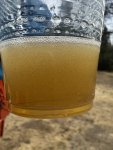
Air in oil. What is normal?

JonM

Well-known member
Lifetime Member

Equipment
L6060,SA20,4in1,BH92,QH16,BS40,APS1572,RTR2570,HR2572,WC1504,FM2584,SBP1684
Nov 29, 2024
283
677
93
wisconsin
water would be in the bottom. those are air bubbles. check your fluid level. aeration from what i understand is caused by low oil level
 

William1

Well-known member
Lifetime Member

Equipment
BX25D, JD X754 AWS Mower
Jul 28, 2015
1,465
656
113
Richmond, Virginia
Excessive air in oil comes from two methods. One, too low an oil level, the oil scavenge sucks in air and churns. The other, too much oil and the crank spinning froths it up.
 

Russell King

Well-known member
Lifetime Member

Equipment
L185F, Modern Ag Competitor 4’ shredder, Rhino tiller, rear dirt scoop
Jun 17, 2012
7,954
3,113
113
Austin, Texas
T
Ok, the oil level is normal. Can you tell me what scavenging is?
Think about a kid trying to get 110% of a drink out of a cup through a straw. Slurping is another way to think of it.
 
  • Like
Reactions: 1 users

Russell King

Well-known member
Lifetime Member

Equipment
L185F, Modern Ag Competitor 4’ shredder, Rhino tiller, rear dirt scoop
Jun 17, 2012
7,954
3,113
113
Austin, Texas
Yes.

But you may want to look at all the rubber hoses and the connection points on the suction side of the pump. There may be some issues that allow air to be sucked into the oil. The issues are loose connections, cracked hoses or leaky joints.

But honestly you have shown a cup of oil with entrained air and asked if that is normal. But you don’t say much else. Like how you got the oil out of the tractor, why you are concerned about it, why you started to even look at the oil.

I don’t have a hydrostatic drive tractor so can’t say if that is normal or not. I can say that oil returning to a transmission case may have some entrained air in it but if there is foaming that is not normal. The air should get out of the oil quickly and not foam. There are additives in the oil to help that happen. Are you using the correct type of oil? Is the tractor trying to creep foreword or backwards at all? Is there any squealing noises? How long have you noticed this happening or has it suddenly started? Has anything happened to the tractor and then this started?
 
Last edited:
  • Like
Reactions: 3 users

TheOldHokie

Well-known member
Lifetime Member

Equipment
L3901/LA525, G2160/RCK60, G2460/RCK60
Apr 6, 2021
12,854
7,304
113
Myersville, MD
windyridgefarm.us
Anytime you pump oil through a hydraulic system it creates aeration. Lots of factors affect the amount of aeration including oil temperature, sump size relative to flow rate, orifice sizes, etc. Some aeration is normal and I think you are looking for a problem where none exists.

Dan
 
  • Like
Reactions: 1 user

GeoHorn

Well-known member
Lifetime Member

Equipment
M4700DT, LA1002FEL, Ferguson5-8B Compactor-Roller, 10KDumpTrailer, RTV-X900
May 18, 2018
6,881
4,219
113
Texas
Anytime you pump oil through a hydraulic system it creates aeration. Lots of factors affect the amount of aeration including oil temperature, sump size relative to flow rate, orifice sizes, etc. Some aeration is normal and I think you are looking for a problem where none exists.

Dan
I respect Dans’ expertise with hydraulic systems but I strongly disagree that “Anytime you pump oil through a hydraulic system it creates aeration”.

In a healthy system NO aeration should occur. Aeration is harmful and is the result of either low supply in the sump (where the pump sucks air up with the oil)…Or, a leak in the suction-side of the system. Look for a leak or a break between the oil in the sump and the pump.…or a leak or crack at/in the pump itself.
(Very rarely oil being injected into an existing sump of oil can inject air into the system, …but that is not something to be found in a closed system.)
 

TheOldHokie

Well-known member
Lifetime Member

Equipment
L3901/LA525, G2160/RCK60, G2460/RCK60
Apr 6, 2021
12,854
7,304
113
Myersville, MD
windyridgefarm.us
I respect Dans’ expertise with hydraulic systems but I strongly disagree that “Anytime you pump oil through a hydraulic system it creates aeration”.

In a healthy system NO aeration should occur. Aeration is harmful and is the result of either low supply in the sump (where the pump sucks air up with the oil)…Or, a leak in the suction-side of the system. Look for a leak or a break between the oil in the sump and the pump.
Nonsense. Do a little research. Or a sumple experiment like filling a bucket with a garden hose.

Gas entrainment is an unavoidable phenomenon in any hydraulic system where fluid is being pumped at high pressure and flow rates. Limiting it is a primary concern when designing any system.

In addition to ordinary turbulence the cavitation mentioned below occurs at many places in a high pressure high flow system, not just the pump. Cavitation and resultant aeration occurs in any high shear region - e.g flow restrictions like the glands on valve spools.

All of that adds up to bubbles in the sump where the bubbles are given time to dissipate.

Causes of Air Entrainment
  • Suction Leaks: Loose hose clamps, microscopic cracks, or worn pump shaft seals allow the intake side to pull air directly into the fluid. [1, 2]
  • Reservoir Issues: Low oil levels create vortices that suck surface air down, while undersized tanks or missing internal baffles give bubbles too little time to escape. [1, 2]
  • Turbulent Returns: High-velocity oil or return lines dumping fluid above the tank level cause splashing and constant aeration. [1, 2]
  • Pressure Drops: Sudden pressure releases or restrictions at the pump inlet cause dissolved air to turn into gaseous bubbles. [1, 2]

 
Last edited:
  • Haha
Reactions: 1 user

GeoHorn

Well-known member
Lifetime Member

Equipment
M4700DT, LA1002FEL, Ferguson5-8B Compactor-Roller, 10KDumpTrailer, RTV-X900
May 18, 2018
6,881
4,219
113
Texas
Nonsense. Do a little research. Or a sumple experiment like filling a bucket with a garden hose.

Gas entrainment is an unavoidable phenomenon in any hydraulic system where fluid is being pumped at high pressure and flow rates. Limiting it is a primary concern when designing any system.

In addition to ordinary turbulence the cavitation mentioned below occurs at many places in a high pressure high flow system, not just the pump. Cavitation and resultant aeration occurs in any high shear region - e.g flow restrictions like the glands on valve spools.

All of that adds up to bubbles in the sump where the bubbles are given time to dissipate.

Causes of Air Entrainment
  • Suction Leaks: Loose hose clamps, microscopic cracks, or worn pump shaft seals allow the intake side to pull air directly into the fluid. [1, 2]
  • Reservoir Issues: Low oil levels create vortices that suck surface air down, while undersized tanks or missing internal baffles give bubbles too little time to escape. [1, 2]
  • Turbulent Returns: High-velocity oil or return lines dumping fluid above the tank level cause splashing and constant aeration. [1, 2]
  • Pressure Drops: Sudden pressure releases or restrictions at the pump inlet cause dissolved air to turn into gaseous bubbles. [1, 2]

deleted
 

North Idaho Wolfman

Moderator
Staff member
Lifetime Member

Equipment
L3450DT-GST, Woods FEL, B7100 HSD, FEL, 60" SB, 743 Bobcat with V2203, and more
Jun 9, 2013
36,237
11,130
113
Sandpoint, ID
Looks normal to me too.
Depending on how you got the sample that might explain some of it too.
 
  • Like
Reactions: 1 user

Runs With Scissors

Well-known member

Equipment
L2501 TLB , Grappel, Brush Hog, Box Blade, Ballast box, Forks, Tiller, PH digger
Jan 25, 2023
4,024
5,448
113
Michigan
Maybe I missed it, but is there a problem the OP is trying to solve? (i.e. FEL not working, strange noise, tractor not moving?????)

I mean, no disrespect intended, but how/why would someone take a sample of their hydraulic fluid?....Just for "kicks and giggles"?

Just curious. 🤔