

I have been able to remove pump and found a large washer just floating in cavity. Is it supposed to be secured? Also there is a recess on one side which way does it go? I was experiencing almost zero lift.
Need help B8200 hydrolic pump
- Thread starter mwqualey
- Start date

Which cavity? Did you do any diagnostics before pulling the pump? Pictures of your parts is always gelpful.I have been able to remove pump and found a large washer just floating in cavity. Is it supposed to be secured? Also there is a recess on one side which way does it go? I was experiencing almost zero lift.
Dan
Russell King
Well-known member
Lifetime Member
Equipment
L185F, Modern Ag Competitor 4’ shredder, Rhino tiller, rear dirt scoop
I assume that “washer” is really the remnants of the seal on the pump shaft. Your engine oil level may be high from the pump adding hydraulic oil into the engine crankcase. If so you should change engine oil and filter, and possibly add some fluid to the transmission case to refill it.
Here is a parts diagram with the shaft seal part number. If that is the “washer“ then install a new seal.

Here is a parts diagram with the shaft seal part number. If that is the “washer“ then install a new seal.

North Idaho Wolfman
Moderator
Staff member
Lifetime Member
Equipment
L3450DT-GST, Woods FEL, B7100 HSD, FEL, 60" SB, 743 Bobcat with V2203, and more
Are you actually talking about the drive?
This collar / washer was behind the gear 17 when you pulled it apart.
And the grove goes towards the gear.

This collar / washer was behind the gear 17 when you pulled it apart.
And the grove goes towards the gear.
I assume that “washer” is really the remnants of the seal on the pump shaft. Your engine oil level may be high from the pump adding hydraulic oil into the engine crankcase. If so you should change engine oil and filter, and possibly add some fluid to the transmission case to refill it.
Here is a parts diagram with the shaft seal part number. If that is the “washer“ then install a new seal.
View attachment 180928
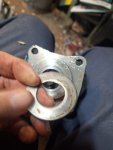
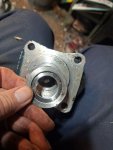
Here the washer. It fell out when I pulled pump off. Not sure which way the recess went. Is it remnants of a seal?
Russell King
Well-known member
Lifetime Member
Equipment
L185F, Modern Ag Competitor 4’ shredder, Rhino tiller, rear dirt scoop
That is NOT the seal (as far as I know!). See post #4 that is probably closer to what it is.
It looks like someone has taken the drive apart and put it together incorrectly.
@North Idaho Wolfman will probably be along and give you a more definitive answer.
It looks like someone has taken the drive apart and put it together incorrectly.
@North Idaho Wolfman will probably be along and give you a more definitive answer.
I suspect thats the bearing retainer. Consult your workshop manual.Here the washer. It fell out when I pulled pump off. Not sure which way the recess went. Is it remnants of a seal?
I will ask one more time - what hydraulic diagnostics have you done and why remove the pump?
Dan
North Idaho Wolfman
Moderator
Staff member
Lifetime Member
Equipment
L3450DT-GST, Woods FEL, B7100 HSD, FEL, 60" SB, 743 Bobcat with V2203, and more


Once the retainer's back in groove side to the bearing like Wolfman said, I'd get a baseline before chasing anything else. Clean the suction screen, top off the fluid, then throw a gauge on it and see what the relief hits with the 3-point at full lift. That one number tells you a lot. If the pressure's good and it still won't lift, I'd look at the lift cylinder or the control valve. If it's low with a healthy pump, the relief setting is usually your culprit. I use a gauge for this and it saves a lot of guessing. Let us know what it reads.
Last edited:
The pressure test is an excellent idea.Once the retainer's back in groove side to the bearing like Wolfman said, I'd get a baseline before chasing anything else. Clean the suction screen, top off the fluid, then throw a gauge on it and see what the relief hits with the 3-point at full lift. That one number tells you a lot. If the pressure's good and it still won't lift, I'd look at the lift cylinder or the control valve. If it's low with a healthy pump, the relief setting is usually your culprit. I check every machine that comes through here with a gauge kit before I touch anything, and it saves a lot of guessing. Let us know what it reads.
On that tractor the best test point for pump discharge pressure is the AUX hydraulic outlet block. Connect your gauge directly to the OUT port and turn the selector valve to the AUX position. That will deadhead the pump against the he gauge. Start the engine and set engine speed to max RPM. A low pressure result indicates a pump or tractor side relief valve priblem. If low pressure is found more testing is needed to identify pump or relief vakve problem.
Dan

Good call, Dan. The AUX OUT port is the easiest place to tee in on that tractor. Hoping the OP posts a number so we can tell if it's the pump or the relief.The pressure test is an excellent idea.
On that tractor the best test point for pump discharge pressure is the AUX hydraulic outlet block. Connect your gauge directly to the OUT port and turn the selector valve to the AUX position. That will deadhead the pump against the he gauge. Start the engine and set engine speed to max RPM. A low pressure result indicates a pump or tractor side relief valve priblem. If low pressure is found more testing is needed to identify pump or relief vakve problem.
Dan