Kubota MX5800 egr system plugged .
what would cause this ?
what would cause this ?
Attachments
-
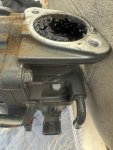 447.8 KB Views: 56
 -
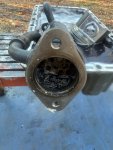 350.2 KB Views: 56




Turbo is not leaking. No oil observed on or near it . Shaft has zero play. The reason I now have it torn down is because the glow system was not working correctly . Cause - corrosion on the terminals. Glow plugs themselves work fine . I tested each with a 12 volt battery. Number one cylinder was low on compression. Found a bent connecting rod on one. I also found two cans of starting fluid in the tool box. Now we know why the rod is bent.One thing that can do it is a leaking oil seal in a turbo.
Excessive idling or short runs can cause it to load up too.


On most (all?) Kubotas the regen process is post EGR. The DOC reacts with whatever the EGR hands it and passes that on to the DPF.EGR is intended to reduce NOx emissions by cooling the combustion temperatures under load ... right? As combustion temperatures go up, which happens as the load increases, NOx output increases, so by adding exhaust to the cylinders, oxygen concentration is decreased and NOx output is decreased.
So if you get the engine nice and hot and work it hard, the EGR valve motor will open up the valve and allow exhaust gas and crap to flow into the intake. If this happens regularly there should be less build up of carbon. I'm not sure that regens have much to do with the EGR system.
It's not clear, obvious or intuitive to me that the EGR valve opens during a regen, and if it does, whether regens are enough to keep the EGR system relatively free of carbon fouling if the tractor is not working hard between regens. The intent of a regen is to burn carbon that's trapped in the DPF, so that requires high temperatures after the turbo. Intuitively, lowering combustion temperatures during a regen via EGR to lower NOx would seem to be counter productive to burning carbon in the DPF. Of course, there are ways to make all of this academic.On most (all?) Kubotas the regen process is post EGR. The DOC reacts with whatever the EGR hands it and passes that on to the DPF.
Dan
When EGR is open a portion of exhaust is going through EGR and being reburned and the balance goes to regenIt's not clear, obvious or intuitive to me that the EGR valve would be open during a regen, and if it does, whether regens are enough to keep the EGR system relatively free of carbon fouling if the tractor is not working hard between regens.
I'm not following.When EGR is open a portion of exhaust is going through EGR and being reburned and the balance goes to regen
When closed none of the exhaust goes through EGR and all of it goes to regen.
How can regen being active or not play any role in carbon buildup in the EGR?
Dan
I thought it was obvious - I am agreeing with you.I'm not following.
The OP stated " Back to the issue I suspect the owner, like most , don’t do the regen." I simply don't see the "obvious" connection so that's why I made a response.
SO a whole lot more information!Turbo is not leaking. No oil observed on or near it . Shaft has zero play. The reason I now have it torn down is because the glow system was not working correctly . Cause - corrosion on the terminals. Glow plugs themselves work fine . I tested each with a 12 volt battery. Number one cylinder was low on compression. Found a bent connecting rod on one. I also found two cans of starting fluid in the tool box. Now we know why the rod is bent.
Back to the issue I suspect the owner, like most , don’t do the regen .
I thought the regen system reduced the carbon buildup. What does the regen actually do?EGR is intended to reduce NOx emissions by cooling the combustion temperatures under load ... right? As combustion temperatures go up, which happens as the load increases, NOx output increases, so by adding exhaust to the cylinders, oxygen concentration is decreased and NOx output is decreased.
So if you get the engine nice and hot and work it hard, the EGR valve motor will open up the valve and allow exhaust gas and crap to flow into the intake. If this happens regularly there should be less build up of carbon. I'm not sure that regens have much to do with the EGR system.
Regen cleans out the filter.I thought the regen system reduced the carbon buildup. What does the regen actually do?
The tractor has a particulate filter (DPF) in place of a muffler. The DPF traps soot in the exhaust gas just before the gas is discharged from the exhaust pipe.I thought the regen system reduced the carbon buildup. What does the regen actually do?
Diesel engines that work hard (and that are well maintained) tend to live long and happy lives. Diesel engines in particular should be nice and hot when running, as much as is reasonably possible, in order to prevent fuel getting past the rings and into the engine oil. Is blow by more likely with higher compression diesel engines compared to gas engines ... probably. Diesel powered ambulances, fire engines, service trucks etc, can spend a lot of time running at idle and will often be on a more aggressive oil change interval for this reason.As always, following this thread, I'm learning a lot about stuff I didn't know I didn't know.
Although my question doesn't help dholt53 answer his original question here it is.
My BX doesn't have Regen because it's under a certain HP. However should I also be concerned about operating at less than ideal RPM's to prevent build up and if so is that true for most diesel tractors regardless of HP?