
Kubota On Demand: Let there be Specs!

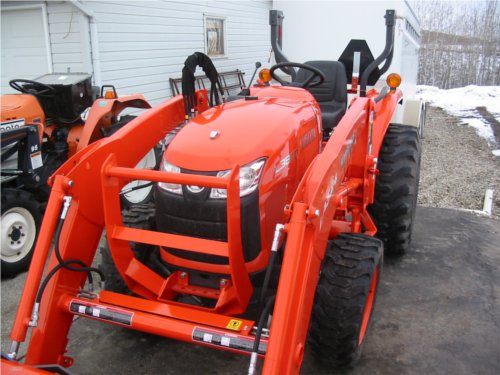
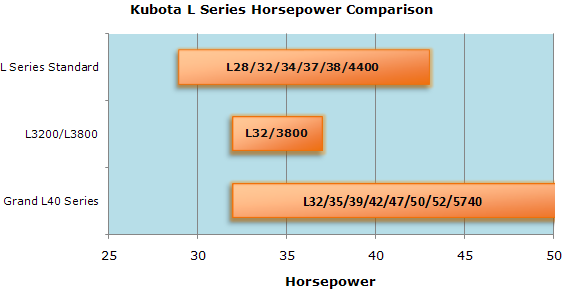
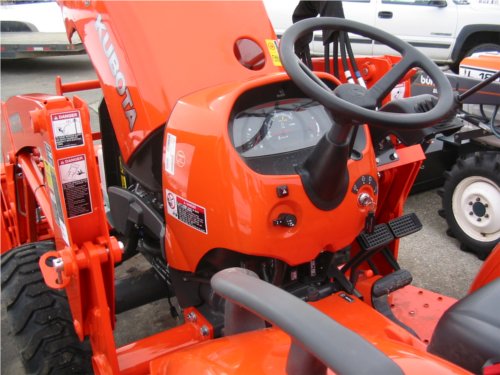
Finally! After a lot of hard work the first iteration of Kubota On Demand is now ready to go live. It is a 100% custom-built database for Kubota equipment specifications. Specs on models, engines, transmissions, mowers, rototillers, backhoes, loaders and mowers are listed. Painted orange? We have specs for it!

Right now at launch we only have 30+ of Kubota’s models with specifications listed, but, we are working hard to add more on a daily basis. You can help out too by adding your own pictures, videos, PDFs and what not under the appropriate sections.

kubotaondemand3

Kubota On Demand is an ongoing project that will include future updates with even more goodies and more specs. Until then, check it out and let us know what you think.

Comments (3)

ZEN-NOH and Kubota Part 5: Fallout

A ZEN-NOH branded Yanmar 2610. Yanmar, like Kubota, also manufactured plenty of equipment for the ZEN-NOH agricultural cooperative.

A ZEN-NOH branded Yanmar 2610. Yanmar, like Kubota, also manufactured plenty of equipment for the ZEN-NOH agricultural cooperative.

This article is the final in a series of five that examines how ZEN-NOH and other gray market tractors came to be in such great numbers in North America and other countries. Look for Part 1, Part 2, Part 3 and Part 4 as well.

Last we left off, Gamut Trading had registered the ZEN-NOH trademark as their own and began importing tractors from Japan into the United States. While technically not against the court orders it was against the spirit of the court’s decision. Kubota brought another lawsuit against them in fall of 1998 and won a judgment in excess of $2.3 million US. Importing gray market ZEN-NOH or Kubota tractors into the United States was dead.

What Happened to Mike Wallace?
After going round 1 with Kubota and losing, Mike Wallace went looking for redder pastures. He continued to import used compact diesel tractors from Japan, dropping Kubota and importing mostly Yanmar tractors. In September 2002, he reacquainted himself with his old buddies at Gamut Trading. Since they had now been sued into the stone age by Kubota’s legal department, they did not have much need for the ZEN-NOH name anymore.

Wallace asked if he could become an authorized user of Gamut’s trademark. In 2003, Gamut Trading and Wallace became business partners once again, this time in the ownership of the ZEN-NOH trademark, name, stylized print and logo!

Yanmar Strikes
Wallace did not have a lot of time left to savor that trademark co-ownership. By mid 2003, plans were already floating around the boardroom table at the Yanmar Motor Corporation in Japan, to form a new US subsidiary, the Yanmar Diesel America Corporation. The purpose of this new venture was to reestablish the Yanmar brand in North America. This would mean new franchisees, new parts dealers, new generator and engine sales and a complete relaunch of the entire Yanmar compact tractor line-up. Yanmar had actually departed the market about 2 decades earlier.

Yanmar had a little unfinished business to tidy up before offering franchises for sale in the United States. In August of 2004, Yanmar brought a Consent Order, Judgment and Permanent Injunction in the US District Court for the Eastern Division of California against, Mike Wallace and Wallace International Trading, barring him from ever importing, selling, and marketing, being involved in or around a Yanmar tractor, a ZEN-NOH Yanmar or any other type of Japanese tractor! We have a copy of that injuction for your legal reading pleasure.

Yanmars lawyers did all their homework as well! Since so much case law now existed regarding trademark infringement on Japanese imported tractors, a history of hood labels being changed, calling a tractor a ZEN-NOH model, falsifying importation documents etc., that Yanmar had no trouble making Mike Wallace go quietly into the night, forever.

What Happened to Ron and Darrel?
After going round 2 with Kubota and being subject to large fines, Gamut Trading went out of the tractor importation business.

It is not known where Darrel landed after the dust up with Kubota, but his brother Ron DePue had owned operated and closed down, Homestead Tractor and Feed and may have had to sell or close it as payment to settle with Kubota. Ron is currently owner of Just Tractor Parts located in Apple Valley California. He is listed as the authorized distributor for Hercules Aftermarket ROPS (which coincidentally has models available for both Kubota, ZEN-NOH and Yanmar tractors!)

What Happened to the ZEN-NOH trademark?
The ZEN-NOH trademark, as registered in the United States, lapsed on February 14th 2009. Gamut Trading decided not to renew for obvious reasons. What this means is that someone else could grab that trademark and technically own that brand (and perhaps own the wrath of Kubota and Yanmar that comes along with it!).

Timeline
Now that all the pieces of the puzzle are available, a timeline summarizes the events nicely:

  • 1948
    ZEN-NOH agricultural cooperative is founded in Japan. Later grows to be the largest cooperative in the world with revenue in excess of $100 billion USD per year.

  • Late 1970s
    Kubota partners with ZEN-NOH to start producing ZEN-NOH branded equipment on its own assembly line.

  • Early 1980s
    ZEN-NOH registers its trademark in the United States.

  • 1984
    Mike Wallace incorporates Wallace International Trading Co. in California.

  • 1988
    ZEN-NOH’s trademark in the United States expires and is left unowned.

  • Early 1990s
    Wallace International Trading begins importing Kubotas from Japan by the container load.

  • 1996
    Kubota dealerships start to notice cheaper, low hour Kubota equipment on competitive lots. Phones start to ring at Kubota corporate head office in Torrence California. Kubota files legal paperwork against Wallace International Trading.

  • February 1997
    Kubota wins trademark infringement case against Wallace International Trading and secures both general exclusion orders and cease and desist orders against Wallace and his distribution network.

  • February 1997
    Distributors in Wallace’s distribution network are told by the judge to export, dismantle, part-out or destroy their remaining inventory. Kubota lawyers cackle with glee. Muahahahhaaaa.

  • March 1997
    Gamut Trading, one of Wallace’s distributors, discovers that the ZEN-NOH trademark is available in the United States, applies for and receives the trademark rights.

  • 1997-1998
    Gamut Trading imports hundreds and hundreds of additional ZEN-NOH equipment from Japan into the United States. Rebranding of Kubota equipment to ZEN-NOH equipment “on the dock” is speculated.

  • October 1998
    Kubota files legal paperwork against Gamut Trading.

  • November 1998
    Kubota wins lawsuit against Gamut Trading for violating the terms of the original cease and desist order. Fines are levied at more than $2.3 million. Gray market tractor importation into the United States halts entirely.

  • 2002
    Mike Wallace partners again with Gamut Trading to use their ZEN-NOH trademark to bring Yanmar equipment under that name into the United States.

  • 2004
    Yanmar Company files legal paperwork and wins an injunction against Wallace International Trading, barring him from basically ever importing, selling, parting-out, looking at or sitting on a Yanmar again. Wallace is essentially sued into the stone age.

  • February 2009
    ZEN-NOH trademark quietly expires after Gamut Trading, now defunct, neglects to rewnew it.

  • April 2009
    OrangeTractorTalks publishes a complete history of how so many gray market tractors found their way out of Japan, and how Kubota used their legal might to smash the flood of inexpensive equipment arriving daily. Probably raising a few eyebrows at Kubota corporate in the process – luckily we’re not on their payroll!

Conclusion
The fallout from importing these tractors is still felt today. You can see evidence of it anytime you speak to certain dealerships or Kubota corporate alike. There is a general hostility toward those owners of gray market equipment and those that repair, service or provide parts for. It stems from these series of events – importing thousands and thousands of Kubotas from Japan, flooding the domestic market with high quality, low hour, less expensive models.

Can you blame Kubota for feeling a bit frustrated though? They came to North America and their L200 was an instant success! Things were looking up and they were going about their usual business for 20 years. Then, a few creative individuals got together and changed the game. It was not in Kubota’s plans to be competing with itself. This problem is something that Kubota continues to struggle with today and has served as an important lesson to other equipment manufacturers.

Mike Wallace, having been sued once by Kubota and another time by Yanmar, is definately not high on either company’s list of respected community members. That being said, he pioneered the idea of importing surplus compact tractors from Japan into the United States. He saw an opportunity, gathered suppliers and created a distributor network. Many others have followed his recipe but he was the first. You have got to give that in itself, some respect.

What Wallace started has had lasting effects, and not just for Kubota corporate or their dealership network. Anytime an owner of a gray market or ZEN-NOH tractor wonders where their equipment came from and how it managed to find its way to Tecumseh, Kansas, there is a good chance Mike Wallace had something to do with it.

Service Department Vic

Related Articles
Gamut Trading ZEN-NOH Trademark Application
USITC Kubota Exclusion Order
Kubota Corp V. Gamut Trading et al
Yanmar Company V. Wallace International Trading
ZEN-NOH and Kubota Part 1: A Partnership
ZEN-NOH and Kubota Part 2: Importation
ZEN-NOH and Kubota Part 3: Lawsuits
ZEN-NOH and Kubota Part 4: Loopholes

Comments (8)

Looking for Kubota Specifications? Soon.

Here at OrangeTractorTalks.com we are Everything Kubota and we sure do not like to disappoint! In addition to our articles, videos and active forum, we are preparing to roll out a Kubota specification database.

Comprehensive
The database will cover all of the equipment in Kubota’s past and present model lineup, including gray models. Specs on engines, transmissions, serial numbers, loaders, backhoes, capacities, part numbers – you name it – you will be able to look it up. If you are planning on long-term ownership of your Kubota, we figure this database will come in handy a few times.

Upload Your Content Too
Readers from the Kubota tractoring community will also be able to contribute their own images, web links, reviews, PDF brochures, marketing materials and documents to each model as well. Think of it as the Wikipedia of Kubota equipment!

Great. When is all this ready?
Look for the first roll-out Kubota specifications to appear within the next two weeks.

Comments

ZEN-NOH and Kubota Part 4: Loopholes

An amaturish looking ZEN-NOH label on this Kubota tractor. Work of replacing Kubota hood decals at the export dock in Japan to satisfy US import requirements? We can only speculate of course.

An amaturish looking ZEN-NOH label on this Kubota tractor. Work of replacing Kubota hood decals at the export dock in Japan to satisfy US import requirements? We can only speculate of course.

This is the fourth of five installments that examine the history of ZEN-NOH equipment in North America and how these tractors came to be found in such great numbers. If you are just jumping into this series now, please review Part 1, Part 2 and Part 3 to give yourself some background information.

We last left off with Gamut Trading heading back to Apple Valley California in an effort to comply with the cease and desist order as a result of losing a trademark infringement case brought by Kubota. Part of the cease and desist order’s conditions were that existing Kubota equipment on the lots of the distribution network had to be 1) exported out of the country 2) parted out or 3) sold for scrap metal.

It was about this time, pondering these three alternatives for the equipment they had paid for, that Gamut realized that the trademark case only covered the Kubota name, not ZEN-NOH that they had seen all over the hoods and grille of ZEN-NOH branded Kubotas they had imported. This made them realize that they might be able to import and distribute ZEN-NOH equipment instead! A loophole around the court orders!

Back in Business
What a break! Ronald DePue and his brother Darrel were Chairman of the Board and CFO of Gamut Trading at the time. They performed a check at the United States Trademark Office and found that the trademark ZEN-NOH was available. The name was previously registered and owned in the United States by ZEN-NOH of Japan themselves. In 1988 in a weird twist of fate, ZEN-NOH failed to renew the trademark name leaving it available for adoption by Gamut Trading!

The original trademark registration filed by ZEN-NOH in the early 1980s. They let it expire in 1988 which left it open for Gamut Trading to pick up nearly 10 years later.

The original trademark registration filed by ZEN-NOH in the early 1980s. They let it expire in 1988 which left it open for Gamut Trading to pick up nearly 10 years later.

In March 1997 less than three weeks after Kubota’s legal dropped the hammer on them, Gamut Trading bought the ZEN-NOH trademark and name. They became the new owners of the brand for $245. They indicated on their trademark application that they were users of the ZEN-NOH trademark since 1986, long before they had probably even seen a ZEN-NOH tractor. We have a copy of Gamut’s full trademark application which you can see here.

A cover letter dated March 11th from Gamut's lawyer sent to the United States Trademark Office.

A cover letter dated March 11th from Gamut's lawyer sent to the United States Trademark Office.

A copy of Gamut Trading's awarded trademark for ZEN-NOH, dated March 14, 1997 - about 3 weeks after losing the trademark infrindgement case to Kubota.

A copy of Gamut Trading's awarded trademark for ZEN-NOH, dated March 14, 1997 - about 3 weeks after losing the trademark infrindgement case to Kubota.

In a legal move that now sounds strangely familiar – Gamut Trading also registered the name ZEN-NOH with United States Customs and Border Security to prevent any other entity from importing a used tractor from Japan bearing their trademark, ZEN-NOH. Kubota’s lawyers had schooled them in court and they were obviously paying attention to the lessons!

Even as Gamut was proceeding with an appeal against the USITC general exclusion order they had become the registered legal owners of the ZEN-NOH trademark. This would allow them to import all the ZEN-NOH branded tractors they could get their hands on, regardless of whether they were made by Yanmar or Kubota. Plus, as the new owner of the trademark, they could for a fee, sell a licensing agreement to future tractor importers or resellers wanting in on this still emerging market. Brilliant!

Kubota Strikes Back – Again
It is not known whether Gamut Trading actually instructed their export suppliers to remove the offending Kubota hood decals, but, as the new owners of the ZEN-NOH trademark and name brand, Gamut resumed importing used Kubota Tractors almost immediately after being served with the original cease and desist.

Between February 1997 and October 1998 Gamut continued to import used Kubota tractors. On 56 different shipments the tractors were identified as ZEN-NOH L and B Series Tractors on the customs declarations paperwork. The Border Services could not turn them away because there was no violation here – ZEN-NOH tractors were free to enter the United States.

When these ZEN-NOH tractors finally cleared customs, Gamut knew that their resellers would not want a no-name unheard of tractor brand. Gamut routinely advertised their tractors as Kubota/Zennoh tractors, stressing that the tractors are the same thing. They went as far as to supply new Kubota hood decals including instructions on how and where to install them!

Little did brothers Ron and Darrel of Gamut know, but, Kubota coporate was already onto their operation. Kubota hired private investigators posing as prospective tractor resellers, recording phone conversations and obtaining wire taps. The end was near.

A ZEN-NOH L1501 in decent shape.

A ZEN-NOH L1501 in decent shape.

Sued Into the Stone Age
When the dust settled on round two of the legal battle, Gamut was fined in excess of $2.3 million USD and found in violation of the original cease and desist order placed upon them by the USITC in February 1997. Kubota was seeking a penalty in the $6.9 million range, but since the directors of Gamut had willingly destroyed so many boxes of files and records pertaining to the importation of these tractors, the deciding Judge could only base the penalty amount on the information the investigators could find. We have a copy of the formal proceedings of Kubota Corp V. Gamut Trading et al available here.

Up Next, Fallout
After the lawsuits flew where did the chips fall? What did these players do afterward and what are they doing today? What impact did importing these tractors have? We answer these questions and provide a handy timeline of the whole puzzle in our upcoming and final segment of this series.

Service Department Vic

Related Articles
Gamut Trading ZEN-NOH Trademark Application
USITC Kubota Exclusion Order
Kubota Corp V. Gamut Trading et al
ZEN-NOH and Kubota Part 1: A Partnership
ZEN-NOH and Kubota Part 2: Importation
ZEN-NOH and Kubota Part 3: Lawsuits
ZEN-NOH and Kubota Part 5: Fallout

Comments (2)

Kubota Battery Basics

Ahhh yes, the battery. Really handy when it comes to starting your Kubota but after that just seems like its along for the ride. Still, it is important that we think about the battery every now and then to avoid a situation where we are 5 miles away, sun going down, wolves starting to come out… you know the drill. Let us look at some ways to make sure your battery is the best it can be.

Cold Cranking Amperes
The CCA rating, or cold cranking amperes, of your Kubota’s battery is a measure of its ability to deliver current at a temperature of 0 degrees Fahrenheit (-18 Celsius) for 30 seconds – hence the reference to cold. We know that as the temperature decreases the efficiency of the battery decreases. This explains why the battery CCA rating is lower than its cranking amperes, or CA, rating measured at a warmer 32 degrees. Most cars have batteries around 500-600 CCA.

The engine in your Kubota is of high compression which means it takes a lot of muscle to get it going in the first place. We recommend at least a 850 CCA rated battery or even 1000 CCA if you live in a cooler climate. It is important to remember that even if the battery is fully charged and fresh, if it lacks the ability to deliver enough current to get that engine turning over your equipment will not start – especially on cold days.

A battery that we pulled during routine service. Although the battery was fully charged, the CCA rating here is 525 which is too low. Replacing the battery with one that offered higher CCAs will greatly decrease starting effort.

A battery that we pulled during routine service. Although the battery was fully charged, the CCA rating here is 525 which is too low. Replacing the battery with one that offered higher CCAs will greatly decrease starting effort.

Hold Down Bracket
Most of Kubota’s lineup ship from the factory with some sort of battery hold or tie mechanism. Usually it is just an angled bracket that holds the battery snug with a couple of long bolts. The purpose of this bracket is to reduce the amount of shock and vibration transferred to the battery during normal operation – and operating a tractor can be a bit rough sometimes.

A battery and hold down bracket.

A battery and hold down bracket.

The reason we want to reduce vibration to the battery is to prevent the parallel lead plates inside of the battery from colliding and destroying themselves. There are 6 cells in a standard battery. Each time a cell is destroyed expect a drop of 2.1V across the terminals – not good. Vibration is a quick way to destroy your new battery.

Does this mean you need to purchase an expensive anti vibration battery too? No. I do not think that the value is there for anti vibration batteries. Make use of your battery hold down bracket or get one if you have lost it and you are set.

Know Your Battery Terminals
Inspect your battery terminals. They should be free of chalky white corrosion and nice and snug on the battery posts. Make sure you have a solid ground connection to the frame. So far, easy right?

Comparison between old connectors that need replacement. The old connector had a crack all the way through its right side. This meant regardless of how tight the connector was closed around the post, a good connection would never be made.

Comparison between old connectors that need replacement. The old connector had a crack all the way through its right side. This meant regardless of how tight the connector was closed around the post, a good connection would never be made.

Something that is often overlooked is caused by the type of terminal connector itself. There are typically two types of battery terminal connectors:

  1. enclosed style – these have the terminal connector and wire lead as one piece
  2. clamp style – these sandwich the wire from the lead at the back of the connector

What can happen over time with enclosed connectors is the wire inside the sheath can wear and break at the base of the connector. Since everything is enclosed you cannot actually see that the wire is making poor contact with the end of the connector! You will pull your hair out testing everything else (battery, alternator, belts, regulator, etc) before you realize the base of the connector is at fault.

We prefer to use the open, clamp style connectors. It is plain and easy to see if the wire lead is making proper contact. Case closed.

Left - clamp-style connector. Right - enclosed-style connector where the wire can break at or inside the base of the connector leading to unexplainable electrical malfunction.

Left - clamp-style connector. Right - enclosed-style connector where the wire can break at or inside the base of the connector leading to unexplainable electrical malfunction.

Test the Voltage
As mentioned earlier, your Kubota’s battery has 6 cells in it producing 2.1V. When organized in series inside the battery the combined voltage is 12.6V. Take a volt meter across the terminals of your battery periodically and confirm that you are in the neighborhood.

Anything too far off 12.6V and start looking at the rest of your charging system to make sure everything is up to snuff. Unlike our road vehicles, when the battery is not being charged properly it can take months or even a year before that problem manifests itself as a failure to start. It simply takes that long to run the battery down when you do not have a radio, air conditioner or DVD player to power (with exception to the newer M and Grand L series of course!).

Using a volt meter to measure across the terminals. 12.5V reading here means this battery is well charged (but still not enough CCAs to be useful in our Kubota).

Using a volt meter to measure across the terminals. 12.5V reading here means this battery is well charged (but still not enough CCAs to be useful in our Kubota).

Battery Recommendation
Again, you do not need an expensive antishock battery here. We use Energizer batteries rated at 850+ CCA from WalMart. Others have had good luck with Exide or Allstate Mega-tron (sounds like a gun or something). All priced around $80-100 + battery disposal tax.

Summary
In short, some things you can do to make sure your battery is in good working order for when you need it:

  • use a battery rated at 850 CCA or higher
  • make use of the battery hold down bracket to prevent premature failure
  • make sure your battery terminals are clean and tight on the posts
  • use open, clamp-style terminals if you can opposed to enclosed terminals
  • periodically measure the voltage across the terminals – a properly charged battery should be around 12.6V

Having Other Problems?
Read through this article, checked your battery and starting to think it might be something else? We have segment coming up that looks a little deeper into your electrical and charging system. Stay tuned!

Related Articles
Forum: BX22 battery replacement

Comments (2)

Putting the Mower to Work

Mowing tall grass with Kubota

OrangeTractorTalks reader Jamie from Zambia, Africa (map) has posted a picture of his L1501 tackling the task of mowing elephant grass in our gallery. This grass can grow upwards of 8-9 feet in height! Regardless of how much you might neglect your own lawn or brush, I bet your mower has less than this to contend with! Keep those blades sharp and that mower serviced.

Great pic Jamie, thank you for sharing. If you have a picture of your favorite orange machine in action or just sitting pretty, upload a picture of it.

Comments

Next entries » · « Previous entries