
Poll Results: Would You Own a Gray Market Kubota?

A classic example of a gray market Kubota - the L1501.

A classic example of a gray market Kubota - the L1501.

A little while back we posted a poll attempting to gauge how gray market Kubotas sit with readers of OrangeTractorTalks. We wanted to know what people thought of the gray market equipment that our friends at Kubota corporate have warned about. Would anyone want to actually own one of these?

Gray market tractors, specifically Kubota grays, have had an interesting history involving leaving Japan in large volumes and eventually arriving at their second homes all over the world. Emails and visitors from all around the world arrive asking questions about their gray market equipment. Folks from Greek islands, South Africa, Australia, France, Germany, Spain, Iran, Ireland and closer to home too – Camrose Alberta or Moosejaw Saskatchewan.

graymarketpollresults2

Results
After 300 votes, almost 70% of folks feel they have no problem owning a gray market Kubota. A full 42% of those voting indicated they had no worries when it came to the special type of ownership that comes along with owning a gray market tractor. 7% were still on the fence – not sure if the hassle and lack of support from their dealership is worth it.

Some might say that the poll is skewed a bit. After all, this is an orange tractor enthusiast site, so any responses to the poll would likely reflect positive feedback for ownership of any orange units, even if they are labeled as gray market. I am sure owners of gray market tractors responded to the poll. If they have had negative experiences with their equipment I think we would have seen higher figures for the choices “no – not interested”.

Conclusion
Despite the rumors and supposed horror-stories, a lot of people can see value in those gray market Kubotas – enough so that 7 out of 10 would own one. It is true that your local Kubota dealer might not be all that helpful when it comes to the great deal you found in your local agri-trader that you now want to fix up. Fear not – there are places to find parts and helpful advice when it comes to that gray Kubota (hint: you are at the site now).

Stay tuned for another poll to come out in the next day or two!

Related Articles
Poll: Would You Own a Gray Market Tractor?
ZEN-NOH and Kubota Part 1: A Partnership

Comments

Kubota Service Bulletin: Maintenance Intervals

Own any of these new Kubota models?

B2320, B2620, B3200, B26
BX1860, BX2360, BX2660, BX25
Grand L 40 Series, L45
M59, MX5100, M100X, M110X, M126X, M135X
RTV500, RTV900, RTV1100, RTV1140
T1880, T2080, T2380, ZG222, ZG227, ZG327, ZD321, ZD326, ZD331

Updated Maintenance Schedules
Late last year Kubota Canada issued a service bulletin detailing that the above models would have their maintenance intervals extended as an attempt to “reduce overall maintenance cost”.

If you do own one of these models you may want to acquaint yourself with the updated service intervals Kubota released along with the service bulletin. These charts are handy when you need to quickly reference when that next oil, fuel or hydraulic filter is due. You can find the updated schedules here:

Kubota Turf maintenance schedule
Kubota RTV maintenance schedule
Kubota B and L series maintenance schedule
Kubota M and MX series maintenance schedule

What Has Changed
If you look through some of the changes highlighted in yellow on the updated schedules, you will see that the next interval after the first service has been pushed out anywhere from 100 to 300 hours. For example, transmission fluid changed at 350 hours instead of 200, or axle case fluid swapped at 400 instead of 300 hours.

Kubota BX service interval updates

Using the BX1860, BX2360, BX2660 or BX25 as an example – the new updates mean that the transmission fluid will be changed once in the first 400 hours of service, instead of the three times it was changed previously. The hydraulic filter is swapped out just about as many times as before. From our own experience we have seen that 50 hour transmission fluid looks pretty clean.

Why Extend the Next Service Interval?
Justin Derzaph, the AG/Construction Sales Manager at Pinnacle International Kubota (Redcliffe, Alberta) explains that some of the reasoning behind the service interval extensions and revisions are due to improved efficiency of Kubota’s new Tier 4 compliant equipment.

We will come back to this in a moment, but first a quick lesson on the state of diesel emissions legislation in the United States as it applies to agricultural equipment…

Understanding Diesel Emission Regulation
Diesel emissions are regulated in the United States by the Environmental Protection Agency, EPA for short. In Canada and most other countries a similar government body exists. Every 4 years since the year 2000 the EPA has required diesel engine suppliers to reduce emissions on new engines manufactured for off-road products – like your orange tractor for instance.

epastandards

Diesel engines manufactured after January 1, 2008 must be Tier 3 or Tier 4i compliant. It was permitted to sell product with Tier 2 engines in 2008 so long as the engines were built in 2007.

EPA Tier 4i is an interim standard with lower emission levels than those required to meet Tier 3, but it is not as low as Tier 4 Final that comes into effect 2012. Tier 4i engines can be manufactured for an additional year before Tier 4 Final goes into effect.

Where Kubota Stands
Kubota has met the Tier 4 Final standard on their engines already so their diesel engine design will actually not need to change again for 8 full years at the latest. Kubota will likely not sit around waiting though – it has been known to be well ahead of the curve regarding emissions standards and probably already has folks looking into it.

The upgrades that go into making a Kubota run cleaner, more efficient also mean that some of those maintenance items can go an extra 50, 100 or even 200 hours. Saves you money too. Handy.

50 Hour Service Important
Justin reminds us that those items included under a 50 hour service are still very important and Kubota has not eliminated or changed any aspect of that first service and inspection.

There is a lot of flash left over from the manufacturing process that those first set of filters will catch. Change that oil and oil filter as per usual. You will want to keep your warranty in check and also maximize the performance of your new equipment – something that only regular maintenance can provide.

Special thanks to Justin at Pinnacle International Kubota in Alberta for shedding some light on Kubota’s service interval updates. If you are in the southern Alberta area and looking for Kubota sales or service, check out their shop just NW of Medicine Hat. Good guys.

Service Department Vic

Related Articles
Kubota’s Super Three Engine Series

Comments (1)

School’s Back in Session

A little less of this.

A little less of this.

A lot more of this.

A lot more of this.

Mr. K is back! From vacation that is. Time to get back to the business of Kubota 101.

Up until now Service Department Vic has been holding the fort and he has been doing a good job of that – we thank him. But the show must go on so we are going to work to bring some new site upgrades, more tractor specs, new articles and of course, handy Kubota videos.

Look for those new additions soon, until then check out our forums and sign up to post questions of your own if you have not done so already.

Comments (2)

RTVs and M Series in Original Packaging

A couple of shots we snapped of new RTVs still in their packaging!

Stacked RTVs

Stacked RTV

Even larger equipment is also stacked – B, L or M series included. The gents in the shipping department skip the wood frames in the case of larger equipment and stick to steel cages that better protect the orange paint. It is a long boat ride across the Pacific!

Here we have a M7040 that is folded up nicely to fit into its enclosure. I’d imagine a dozen or more of these would fit into a standard size shipping container. Better make sure your forklift is in good running order.

Disassembled M7040

packagedm7040_2

Anyone want to guess what is inside every orange box that is included? No really – I forgot to open it up and take a look when I had the chance!

M7040 orange box

Comments (2)

Kubota On Demand: Let there be Specs!

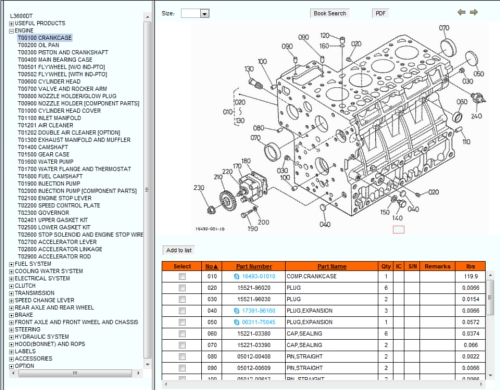
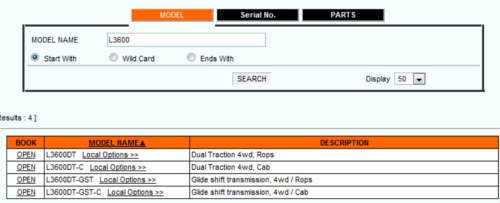
Finally! After a lot of hard work the first iteration of Kubota On Demand is now ready to go live. It is a 100% custom-built database for Kubota equipment specifications. Specs on models, engines, transmissions, mowers, rototillers, backhoes, loaders and mowers are listed. Painted orange? We have specs for it!

Right now at launch we only have 30+ of Kubota’s models with specifications listed, but, we are working hard to add more on a daily basis. You can help out too by adding your own pictures, videos, PDFs and what not under the appropriate sections.

kubotaondemand3

Kubota On Demand is an ongoing project that will include future updates with even more goodies and more specs. Until then, check it out and let us know what you think.

Comments (3)

ZEN-NOH and Kubota Part 5: Fallout

A ZEN-NOH branded Yanmar 2610. Yanmar, like Kubota, also manufactured plenty of equipment for the ZEN-NOH agricultural cooperative.

A ZEN-NOH branded Yanmar 2610. Yanmar, like Kubota, also manufactured plenty of equipment for the ZEN-NOH agricultural cooperative.

This article is the final in a series of five that examines how ZEN-NOH and other gray market tractors came to be in such great numbers in North America and other countries. Look for Part 1, Part 2, Part 3 and Part 4 as well.

Last we left off, Gamut Trading had registered the ZEN-NOH trademark as their own and began importing tractors from Japan into the United States. While technically not against the court orders it was against the spirit of the court’s decision. Kubota brought another lawsuit against them in fall of 1998 and won a judgment in excess of $2.3 million US. Importing gray market ZEN-NOH or Kubota tractors into the United States was dead.

What Happened to Mike Wallace?
After going round 1 with Kubota and losing, Mike Wallace went looking for redder pastures. He continued to import used compact diesel tractors from Japan, dropping Kubota and importing mostly Yanmar tractors. In September 2002, he reacquainted himself with his old buddies at Gamut Trading. Since they had now been sued into the stone age by Kubota’s legal department, they did not have much need for the ZEN-NOH name anymore.

Wallace asked if he could become an authorized user of Gamut’s trademark. In 2003, Gamut Trading and Wallace became business partners once again, this time in the ownership of the ZEN-NOH trademark, name, stylized print and logo!

Yanmar Strikes
Wallace did not have a lot of time left to savor that trademark co-ownership. By mid 2003, plans were already floating around the boardroom table at the Yanmar Motor Corporation in Japan, to form a new US subsidiary, the Yanmar Diesel America Corporation. The purpose of this new venture was to reestablish the Yanmar brand in North America. This would mean new franchisees, new parts dealers, new generator and engine sales and a complete relaunch of the entire Yanmar compact tractor line-up. Yanmar had actually departed the market about 2 decades earlier.

Yanmar had a little unfinished business to tidy up before offering franchises for sale in the United States. In August of 2004, Yanmar brought a Consent Order, Judgment and Permanent Injunction in the US District Court for the Eastern Division of California against, Mike Wallace and Wallace International Trading, barring him from ever importing, selling, and marketing, being involved in or around a Yanmar tractor, a ZEN-NOH Yanmar or any other type of Japanese tractor! We have a copy of that injuction for your legal reading pleasure.

Yanmars lawyers did all their homework as well! Since so much case law now existed regarding trademark infringement on Japanese imported tractors, a history of hood labels being changed, calling a tractor a ZEN-NOH model, falsifying importation documents etc., that Yanmar had no trouble making Mike Wallace go quietly into the night, forever.

What Happened to Ron and Darrel?
After going round 2 with Kubota and being subject to large fines, Gamut Trading went out of the tractor importation business.

It is not known where Darrel landed after the dust up with Kubota, but his brother Ron DePue had owned operated and closed down, Homestead Tractor and Feed and may have had to sell or close it as payment to settle with Kubota. Ron is currently owner of Just Tractor Parts located in Apple Valley California. He is listed as the authorized distributor for Hercules Aftermarket ROPS (which coincidentally has models available for both Kubota, ZEN-NOH and Yanmar tractors!)

What Happened to the ZEN-NOH trademark?
The ZEN-NOH trademark, as registered in the United States, lapsed on February 14th 2009. Gamut Trading decided not to renew for obvious reasons. What this means is that someone else could grab that trademark and technically own that brand (and perhaps own the wrath of Kubota and Yanmar that comes along with it!).

Timeline
Now that all the pieces of the puzzle are available, a timeline summarizes the events nicely:

  • 1948
    ZEN-NOH agricultural cooperative is founded in Japan. Later grows to be the largest cooperative in the world with revenue in excess of $100 billion USD per year.

  • Late 1970s
    Kubota partners with ZEN-NOH to start producing ZEN-NOH branded equipment on its own assembly line.

  • Early 1980s
    ZEN-NOH registers its trademark in the United States.

  • 1984
    Mike Wallace incorporates Wallace International Trading Co. in California.

  • 1988
    ZEN-NOH’s trademark in the United States expires and is left unowned.

  • Early 1990s
    Wallace International Trading begins importing Kubotas from Japan by the container load.

  • 1996
    Kubota dealerships start to notice cheaper, low hour Kubota equipment on competitive lots. Phones start to ring at Kubota corporate head office in Torrence California. Kubota files legal paperwork against Wallace International Trading.

  • February 1997
    Kubota wins trademark infringement case against Wallace International Trading and secures both general exclusion orders and cease and desist orders against Wallace and his distribution network.

  • February 1997
    Distributors in Wallace’s distribution network are told by the judge to export, dismantle, part-out or destroy their remaining inventory. Kubota lawyers cackle with glee. Muahahahhaaaa.

  • March 1997
    Gamut Trading, one of Wallace’s distributors, discovers that the ZEN-NOH trademark is available in the United States, applies for and receives the trademark rights.

  • 1997-1998
    Gamut Trading imports hundreds and hundreds of additional ZEN-NOH equipment from Japan into the United States. Rebranding of Kubota equipment to ZEN-NOH equipment “on the dock” is speculated.

  • October 1998
    Kubota files legal paperwork against Gamut Trading.

  • November 1998
    Kubota wins lawsuit against Gamut Trading for violating the terms of the original cease and desist order. Fines are levied at more than $2.3 million. Gray market tractor importation into the United States halts entirely.

  • 2002
    Mike Wallace partners again with Gamut Trading to use their ZEN-NOH trademark to bring Yanmar equipment under that name into the United States.

  • 2004
    Yanmar Company files legal paperwork and wins an injunction against Wallace International Trading, barring him from basically ever importing, selling, parting-out, looking at or sitting on a Yanmar again. Wallace is essentially sued into the stone age.

  • February 2009
    ZEN-NOH trademark quietly expires after Gamut Trading, now defunct, neglects to rewnew it.

  • April 2009
    OrangeTractorTalks publishes a complete history of how so many gray market tractors found their way out of Japan, and how Kubota used their legal might to smash the flood of inexpensive equipment arriving daily. Probably raising a few eyebrows at Kubota corporate in the process – luckily we’re not on their payroll!

Conclusion
The fallout from importing these tractors is still felt today. You can see evidence of it anytime you speak to certain dealerships or Kubota corporate alike. There is a general hostility toward those owners of gray market equipment and those that repair, service or provide parts for. It stems from these series of events – importing thousands and thousands of Kubotas from Japan, flooding the domestic market with high quality, low hour, less expensive models.

Can you blame Kubota for feeling a bit frustrated though? They came to North America and their L200 was an instant success! Things were looking up and they were going about their usual business for 20 years. Then, a few creative individuals got together and changed the game. It was not in Kubota’s plans to be competing with itself. This problem is something that Kubota continues to struggle with today and has served as an important lesson to other equipment manufacturers.

Mike Wallace, having been sued once by Kubota and another time by Yanmar, is definately not high on either company’s list of respected community members. That being said, he pioneered the idea of importing surplus compact tractors from Japan into the United States. He saw an opportunity, gathered suppliers and created a distributor network. Many others have followed his recipe but he was the first. You have got to give that in itself, some respect.

What Wallace started has had lasting effects, and not just for Kubota corporate or their dealership network. Anytime an owner of a gray market or ZEN-NOH tractor wonders where their equipment came from and how it managed to find its way to Tecumseh, Kansas, there is a good chance Mike Wallace had something to do with it.

Service Department Vic

Related Articles
Gamut Trading ZEN-NOH Trademark Application
USITC Kubota Exclusion Order
Kubota Corp V. Gamut Trading et al
Yanmar Company V. Wallace International Trading
ZEN-NOH and Kubota Part 1: A Partnership
ZEN-NOH and Kubota Part 2: Importation
ZEN-NOH and Kubota Part 3: Lawsuits
ZEN-NOH and Kubota Part 4: Loopholes

Comments (8)

Next entries » · « Previous entries